Quick Enquiry
 Notifications
 +91 8585858012
 Notice Board



Why Are Cultural Activities in School Important for Students?
Schools are the second homes for children, where they spend an average of 30 hours learning, interacting, and developing. Along with academics, educational institutions are responsible for raising cultural awareness through extracurricular activities and programs. These events foster creativity while familiarizing children with local and global traditions that are integral to a child’s upbringing. Engaging with cultural activities in school marks a step towards understanding India’s diversity and fosters open-minded, learned individuals.
What are Cultural Activities?
When we think about cultural activities in school, the foremost event that comes to our mind is the annual function. While many schools focus on one big annual event, others prioritize smaller events with local significance. These vary across geographic contexts, as cultural identities are shaped by religious practices, heritage, and folk art forms.
The activities at such events include dance, music, theatre, poetry readings, and art. Students go beyond the curriculum to learn literature and represent its essence through the performing arts.
Students participate in competitions that lead to selection, engage in teamwork to coordinate as a group, and explore untapped talents through school cultural activities. These experiences are distinct from academic preparation, where growth is individualistic.
Cultural events encourage participation, overcome inhibitions, and increase a sense of belonging among students as they perform and create.
Importance of Cultural Activities at School
Here are reasons why schools must help children engage in cultural activities:
1. Experiencing limelight
Every child needs to experience what it feels like to have the spotlight on them when they stand on stage. The feelings of fear, anxiety, and nervousness that they gradually overcome with confidence and ownership boost their self-esteem. These experiences make them expressive, interactive, and courageous enough to take on any challenge life throws their way. The ability to own a stage, entertain, and keep an audience engaged prepares students for interviews, networking, and creating influence.
2. Promotes critical thinking
Cultural activities encourage children to bring out their creativity through critical thinking and implementation. Unlike writing, which is assessed in examinations, performing arts demand practical expertise expressed through movement and expression.
Art forms such as dance, drama, music, and theatre require teaching, preparation, and practice. But what differentiates one student from another is their knack for liking and imbibing an art form that aligns with their natural talent. These make them emote, express, think, and represent what they derive, brewing unique perspectives and presentations.
3. Cultural awareness
Cultural activities in school are tied to local heritage and traditions to help students feel they belong. Not every household celebrates events that a school possibly can, creating opportunities to raise awareness, inform, and teach students about diverse cultures.
Celebrating different events helps students recognize the essence and why they matter. For example, in West Bengal, schools celebrate Rabindra Jayanti on the day of Rabindranath Tagore’s birth. The event includes singing Rabindra sangeet, reciting his writings, and dancing to his music. It commemorates his contribution to literature and familiarizes students with his work.
4. Activities aid academic performance
Art forms like music, drama, dance, and painting are practical activities, unlike solving theoretical problems. They break the monotony of writing textbook answers but push students to think critically and respond differently.
Art fosters creativity by helping kids understand literature, which in turn increases emotional intelligence. These experiences enhance academic performance by nurturing cognitive abilities and brewing mature minds.
5. Strengthens social skills
The process of participation leading to competition and selection acquaints students with the talents they and their classmates excel at. Cultural activities in school are group exercises that take shape through choreographed dance, acting, and choir practices. The process requires teamwork and cooperation that encourages students to lead, follow, and coordinate with one another. These experiences, unlike individual study sessions, grow a sense of sharing, caring, and bearing the fruits of collaborative effort.
Types of cultural activities
Let us explore the types of cultural activities in school, and how they contribute towards holistic development in students:
Dance
Dance is one of the best forms of movement work, bringing vitality to people of all ages. Since growing kids have a lot of energy that must be channeled in the right direction, dancing works effectively. Indian dance forms like Odissi, Bharatanatyam, and Kathak bring culture into classrooms as students explore which form they like.
Benefits
- Learning Indian traditions through dance form
- Pursuing it as an extracurricular activity outside of school
- Understanding body coordination and how it aligns with the mind
Theatre
Theatre familiarizes students with improvisation, enabling them to react quickly based on what they know, can imagine, and can express. It encourages students to study literature, understand storytelling, and respond through character work. Directing plays requires teamwork, encouraging students to collaborate and trust one another throughout the process.
Benefits
- Familiarizing oneself with historical mythologies and folktales to understand culture
- Improve emotional intelligence by enacting stories and resonating with characters
- Understanding the importance of dependence within a team to pull off a show
Debate and Public Speaking
Debate and public speaking activities foster a competitive spirit among students while helping them develop presentation skills. They learn diverse topics and form opinions that prompt them to think critically and narrow down the reasons for their judgments. These activities help them take greater accountability for what they decipher when they study. Topics such as cultural diversity, heritage preservation, climate change, and pollution foster a sense of social responsibility that growing individuals must develop.
Benefit
- Debates promote self-assurance and critical thinking abilities in students
- Public speaking challenges students to communicate with a large audience, which promotes leadership qualities.
Music
Familiarizing students with rhythm engages both hemispheres of their brains, putting cognitive health to best use. Introducing them to different instruments and styles of music helps them explore what kind of music they resonate with.
Annual school functions often feature choir singing that requires multiple students practicing in tune. Music also reduces stress, calms our minds, and becomes a respite during long hours of work and study.
Benefits
- Students familiarize themselves with folk music that helps them understand their culture and heritage
- Music creates opportunities for collaborative effort through choir singing, band performances, and rhythmic practices, where alignment is necessary for being in tune
Visual arts
The visual arts are one of the foremost subjects introduced to school students. Junior classes include a separate Drawing unit to promote imagination and color differentiation. Every child is required to participate in coloring, drawing, painting, and sketching activities to express what they can visualize.
Benefits
- Visual arts are a therapeutic practice that gives students an outlet to relax
- A child’s imagination is best represented through the visual arts, as they paint how they perceive objects around them
- Encourages students to think differently and showcase work through art exhibitions organized by schools
Building community spirit through events
Practicing for events takes students out of the regular classroom code of conduct, allowing them to exercise freedom of expression. They voice their opinion, sing out loud, make mistakes, and keep revising until they pick up the right dance moves. These experiences build a sense of community as students help each other improve at their craft while acquainting themselves with local cultures and traditions.
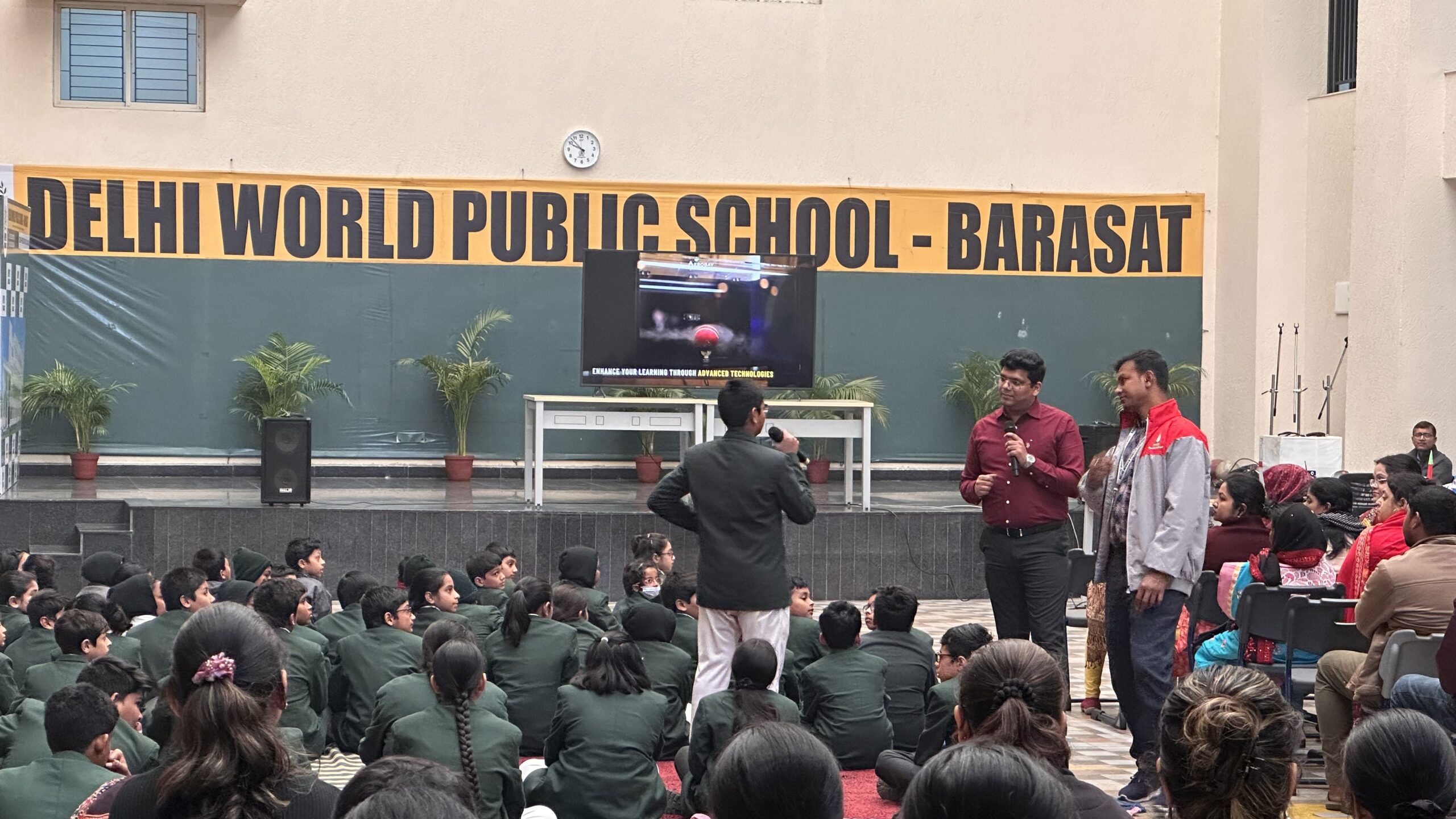
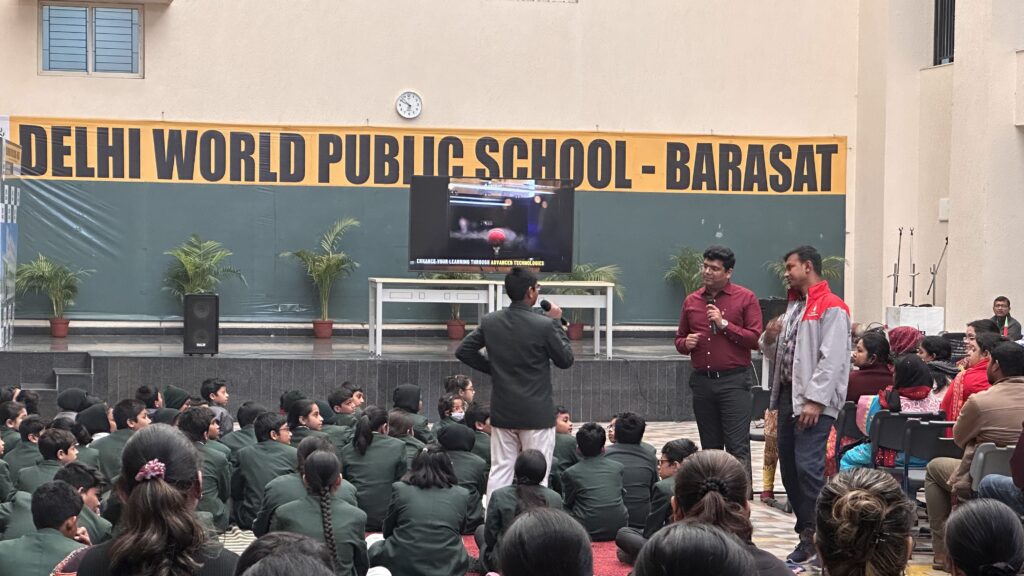
At DWPS Barast, we organize an annual function to showcase different art forms, a Saraswati Pujo to express gratitude to the Goddess of Knowledge, and Rabindra Sangeet to familiarize students with Tagore’s work. We also have fun events like Children’s Day and Christmas celebrations that take students off their mundane academic schedules.