Quick Enquiry
 Notifications
 +91 8585858012
 Notice Board



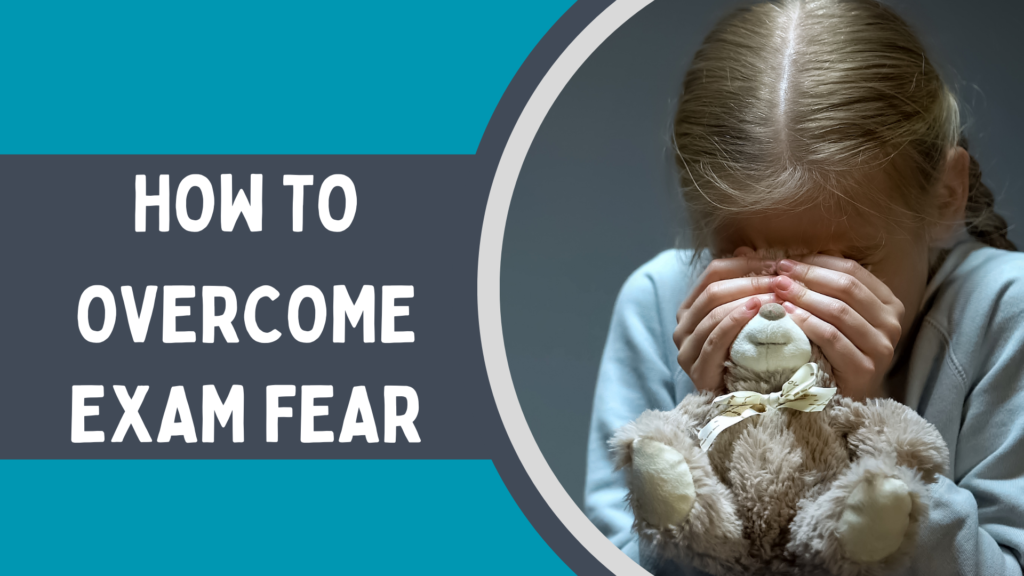
How To Overcome Exam Fear and Have Better Focus on Studies?
The first thought we have when we think about the word ‘exam’ sends a chill down our spine. There is an immediate surge of anxiety associated with the feeling that brews up from self-doubt.
Questions like, “Am I prepared?”, “Will I be able to pass?” “Is the paper going to be hard?” immediately clogs our brains, and we seem to forget everything we’ve learnt all year round!
Well, whether you like it or not, exams are the only way to measure the progress students make in school. It is an integral part of our curriculum that determines how well students perform by helping them grasp the subjects in their syllabus.
Climbing the school ladder involves a series of examinations that are spread across a year. The annual results determine if a candidate is eligible to move to the following standard.
Since we can’t skip the inevitable journey of appearing for tests, we can always keep exam anxiety in check. With this post, we’re going to explain how to overcome exam fear for students preparing for their upcoming tests. These are tried-and-tested formulas that will keep you calm and focused.
What is exam anxiety?
Exam fear comes in the form of anxiety. It is a state of mind that makes students feel unconfident and nervous, ruminating on their experience while writing a test.
Even a student who has consistently done well in exams can feel blank and lose momentum because of those negative emotions. This is another reason why all students must know how to overcome exam fear and put their best foot forward.
Why are exams scary?
There isn’t a specific reason exams are frightening. It could be stress, fear of failure, lack of confidence, and striving for perfectionism.
On the contrary, the trait of having exam fear can also be genetic or impact a child if they have experienced trauma while growing up.
Here are some legit reasons that can cause exam fear:
1. Fear of failure
The most apparent reason exams are scary is the pressure to pass or fail. Students who aim for the highest can also be fearful of not achieving their best potential. It is more of a mind game to tame when they have adequately revised and prepared themselves for the tests.
2. Responsibility of excellence
Exams are also associated with the expectations parents have for their children. When students witness their parents struggling to provide the means for them to do well academically, they realise that a lot is at stake and that their results are directly associated with the collective effort. Such responsibilities also cause exam anxiety, and they continue to grow as students move to higher academic levels.
3. Poor past performances
If a student performs poorly in an examination, fear is inevitable when they reappear for the same or the following one. Poor performance not only reduces our morale but often triggers self-doubt. We question our abilities and wonder whether we can rise again.
The only way to overcome such exam fear is to strengthen preparation to regain confidence. It is also the responsibility of parents and teachers to encourage students after such experiences, while making failures feel less stressful.
4. Lack of preparation
Just as education is a fundamental right, it is also the responsibility of a child to make the most of the provision created. If students neglect their studies, they will become fearful as test time approaches. The only way to overcome such exam fear is to prepare well in advance.
Often, children develop the habit of studying a month before their examination begins. It stresses them out because they have a vast syllabus to cover in a short time. The process leads to skipping in-depth study and having little or no time for revision. Such strategies to study are bound to fail, so learning should be an all-year-round affair.
Symptoms of exam fear
Here are some signs that can help you detect if your child is experiencing exam fear:
- Sweat
- Nausea
- Headaches
- Panic attack
- Lack of sleep
- Procrastination
- Frequently crying
- Anger or irritability
- Restless and fidgety
- Irregular heartbeat
Children cannot express these emotions, especially when they feel guilty about not studying enough. As parents and teachers, we must notice behavioural irregularities and talk to them.
Exams are not a one-time thing as they happen at regular intervals. Students must find a safe space to confide in, no matter what results they achieve, because only when they are accepted as they are can they be motivated to improve.
How to overcome exam fear
Let us walk through some of the tried and tested ways that help students overcome exam fear:
1. Start early
The foremost way to overcome exam fear is to start preparations early as a new school year begins. Ideally, a student should keep pace with the chapters as the teacher covers them one by one. This way they neither lag in the following class nor find it difficult to grasp what they learnt most recently.
When exam preparations start well in advance, it is easier to revise right before students sit for tests. They can quickly seek clarification on complex topics and strengthen the foundation that is impossible when learning anew.
2. Accept fear
If preparations have not begun early, and that leads to anxiety, the only way out is to face your fears and mistakes. Most often, students give up when they realise they don’t have enough time to study, assuming that they’re going to fail.
Accepting fear takes the pressure off you and helps you figure out what you can do within the timeframe you have. Giving up is not an option, so even when there is little time left, make the most of the preparations you possibly can.
3. Set a timetable
A timetable helps you maintain a balanced study routine that includes breaks, fun activities, eating time, and more. Allocating specific time slots for each subject enables you to give adequate attention to all. Prioritise the more complex subjects first, as they take more time to complete. Prepare the tough subjects before you move on to the easier ones, as they tax your brain more and need a fresh mind to complete.
4. Avoid comparison
You cannot overcome the fear of exam failure if you compare your progress with a classmate. It is easy to get carried away when you see a friend who seems to be a lot more prepared than you are for an upcoming test. Focusing on your own preparation will help you improve, whereas feeling demoralised by a friend’s progress will increase self-doubt. The only competition you have to outshine is the numbers you acquired in your previous examination. Only that mindset will help you do better every time.
5. Use school resources
Wanting to go beyond basics? Use your school library as a resource to enhance your progress. A school library will always have books associated with the ones you study during a curriculum. They will expand your understanding of the subjects that interest you and strengthen your preparation. But you must only indulge in going beyond when you’ve completed your academic syllabus.
6. Write as you learn
One of the best ways to overcome exam fear and anxiety is to write as you learn. Every chapter you study has key points that you must highlight or mark to revise later. These key points help you elaborate on explanations when you write theory papers.
The practice of making notes of core parts in a chapter will help you keep quality content handy right before exams. The process not only enhances memory retention but also makes revisions easier.
7. Get good sleep
Sleeping early and waking up at the same time every day reflects a healthy sleep schedule, much needed for smooth cognitive functioning. It regulates our Circadian Rhythm and induces sleep at the right hour.
Exam fear often robs you of sleep, especially if you haven’t started preparing in advance and want to substitute sleep for study. The feeling of anxiety raises a hormone called cortisol, which also results in bad quality of sleep.
8. Eat healthy food
Older students who drink coffee to stay up late and study are more prone to anxiety and stress. With good sleep, students also need to maintain a balanced diet that includes nutritious foods that fuel their bodies and minds. Fruits, veggies, and whole-grain proteins help keep their blood sugar levels steady and provide the focus they need for better memory retention.
9. Exercise regularly
As students go to higher classes, there is a drastic decline in physical activities. It gets harder for them to manage school and studies, and to make time to work out.
It is crucial to acknowledge that hobbies and exercise stimulate our physical and mental health, contributing to holistic self-care. Exercise is non-negotiable, not only for keeping your body active but also for improving brainpower.
10. Do not procrastinate
Procrastination stems from a sense of blankness, often driven by fear of the unknown. For example, the moment you’re about to study a new chapter, you are crippled with anxiety that stems from doubt. You are unsure if you will be able to understand what you’re about to learn, and you end up ignoring the chapter and watching time pass by.
To fight procrastination, you have to manage time and set strict deadlines for what you study. Remind yourself that if you let that time go, you will lose out on the opportunity of learning something crucial for you to get good grades. This way, you will at least do your best to know the chapters instead of skipping them due to fear.
11. Solve mock papers
One of the best ways to overcome exam fear is by solving mock papers because it helps you get a hang of what it would be like to sit for the real test. Mock papers are test papers previously solved by earlier batches. Once you’re fully prepared to write an exam, solve mock papers while setting a timer to check if you’re able to complete it on time.
Solving mock papers boosts confidence because it shows how well you’ve studied. Also, when you’re able to complete solving all questions within the given timeframe, you are prepared to write the real test.
12. Don’t be afraid to fail
Even after trying all the above, if you still aren’t fully prepared, it’s no excuse to quit. Don’t be afraid to fail, because there is always a next time.
Students who skip writing for a test fail because they didn’t try. But students who face their fears utilise the opportunity to do their best and try again later if they fail.
Failures are as much a part of our lives as successes, and the sooner we face them, the better prepared we are for our futures.
Why fear isn’t always bad!
Fear isn’t an emotion we encourage students to have, but it is the opposite of being nonchalant. Fear triggers a survival mechanism that prompts us to take action to prevent something bad from happening.
When students fear examinations, they place greater importance on the responsibilities they have towards themselves, their parents, and the school.
Teachers and guardians must do their bit to calm their anxiety and redirect their fear towards a positive approach. The feeling of failure pushes us to do better than we would have without it. So, fear isn’t always bad but has to be channelled in the right direction.