Quick Enquiry
 Notifications
 +91 8585858012
 Notice Board




How Smart Classroom Equipment Project Future of Tech in Schools
In the age and time where personalized and technology-driven education has become a prerequisite, smart classrooms are shaping the education system. By offering modern modalities to empower and simplify education, smart classrooms are redefining the learning experience. And smart classroom equipment are fueling this transformation.
From high-definition displays and virtual collaboration tools to AI-powered assessment systems, these technologies are transforming education into a more engaging and effective experience.
But what exactly defines a smart classroom? And which equipment makes it truly smart?
This article will introduce you to smart classrooms and the list of smart classroom equipment that forms an essential part of modern learning setups.
What is a smart classroom?
As the name suggests, a smart classroom is a modern classroom equipped with the latest technologies that aid learning. Smart classroom equipment makes learning an immersive experience.
Unlike traditional classrooms, modern classrooms do not have blackboards and textbooks. Instead, they have digital tools, such as laptops, projectors, and virtual reality tools.
Modern digital tools, which form the backbone of a smart classroom, facilitate interactive and collaborative learning. They also help in providing highly personalized instruction to students, accommodating their pace and requirements.
Equipment for smart classroom
Here are examples of smart classroom equipment that schools across the world will gradually adapt for improved learning:
1. Whiteboards and smartboards
Gone are the days when teachers would stand in front of a blackboard with a chalk and duster in hand. Interactive whiteboards will replace traditional blackboards.
Also known as digital whiteboards, interactive whiteboards allow teachers and students to interact with the contents on the digital display with a touch or a digital pen. Teachers can write, draw, or annotate on the display content.
A digital board is capable of running different types of files, programs, and applications. From creating diagrams and graphs to complex presentations, a digital board makes learning a visual process, thereby enhancing efficacy.

2. Laptops and tablets
Smart classrooms provide students with laptops and tablets to allow them to access endless digital learning resources. Students utilize these digital aids to read digital textbooks, watch educational videos, participate in virtual labs, engage in interactive activities and educational apps, and collaborate with their peers in real-time.
Laptops and tablets not only enhance collaboration but also allow students to learn effectively at their own pace.
3. Audio-visual equipment
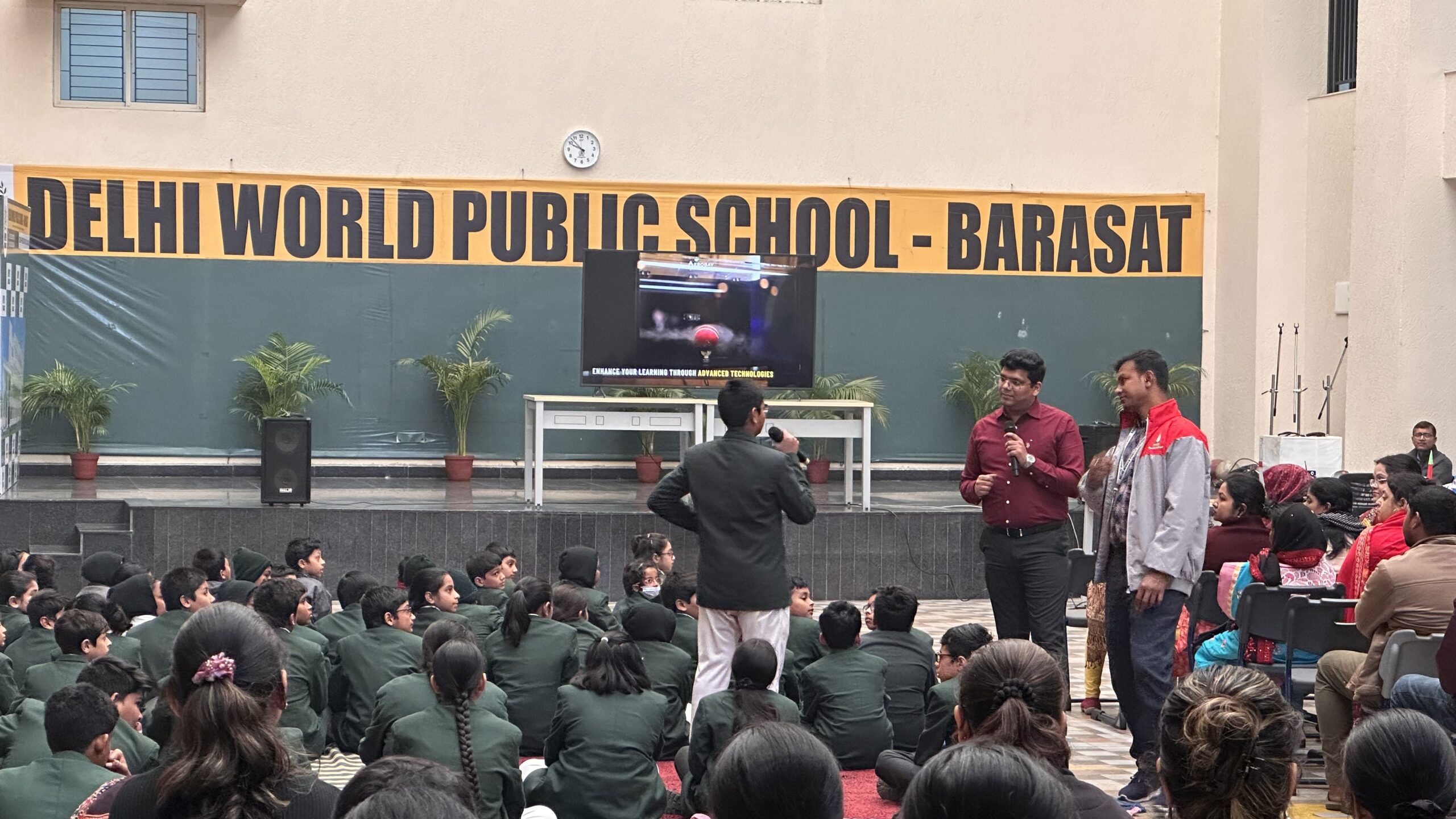
Audio-visual devices, such as projectors, microphones, and speakers, enhance the functionality of classrooms. Essential smart classroom equipment for large classrooms, audio-visual aids make it easy for teachers to deliver engaging lectures.
Connecting the projector to tablets or laptops allows them to display the content on a large screen. Microphones make sure that students can hear them.
These aids make it easy for teachers to teach in a large classroom. Moreover, these modern aids make learning more visual and dynamic.
4. Digital podium
A digital podium is like a remote control that runs the show. It contains a built-in computer, touchscreen, microphone, UPS, control panel, several connectivity options, and other features.
The setup enables teachers to control the display on the projector, presentations, and audio levels during lectures or presentations. This smart classroom equipment facilitates uninterrupted learning.
5. Gamification tools
The biggest differentiator between traditional and smart classrooms is the use of gamification tools. These tools enable learning through quizzes and games, making it more fun and interactive.
Moreover, the play-based learning approach facilitates students’ understanding of complex concepts. The use of gamification tools in the classroom also enhances student participation. Moreover, when students learn something by playing, they tend to retain it for a longer time.
6. Classroom management tools
A smart classroom setup runs on several digital tools. Classroom management tools, such as digital attendance trackers and learning management systems (LMS), contribute to streamlining the teaching and learning experience.
Learning Management System (LMS) makes it easy to keep track of courses and content. It provides dedicated assessment features for various types of assessments along with reporting, analytics, and progress tracking features.
It serves as a centralized platform that facilitates two-way communication between parents and teachers through messaging and exchanging information in real-time. Moreover, taking care of all the administrative tasks allows educators to concentrate solely on teaching.
Other classroom management tools, such as an attendance management tool, help teachers manage attendance-related data. The platform lets them keep a track and share attendance records with parents.
7. Collaboration tools
A smart classroom encourages collaboration and hence, provides various modalities that reinforce collaborative learning. It incorporates multiple cloud-based collaboration tools that help students and teachers to work and grow as a team in this modern and dynamic learning environment.
These platforms allow students and teachers to collaborate in real-time on documentation and projects. It also lets students collaborate with their peers by enabling group discussions, group projects, and document sharing, promoting teamwork.
8. Time management tools
Time management tools are one of the most potent equipment for smart classroom as they help in managing time effectively. These tools provide excellent time management features, including automated scheduling, task reminders, etc.
Applications, such as Todoist, Google Calendar, etc., help students and teachers to streamline and keep track of their tasks and stick to their routine.

9. Feedback tools
Feedback lays the foundation for improvement and growth. These tools in smart classrooms allow teachers to provide their valuable feedback to students in audio/visual or written format. Some modern tools also facilitate real-time interactions for giving feedback. Receiving proper feedback at the right time supports the growth and development of a child.
10. Information kiosk
An information kiosk helps students and visitors access essential information. It is a modern and smart version of a help desk where students or visitors can find relevant information about the school, such as upcoming events, announcements, etc. Students can use this self-service desk to find their timetables, library books, and even the menu of their cafeterias.
The future of tech in education
Smart classrooms are more than just a computer and an internet connection. Although reliable internet connectivity is the most essential element for any smart classroom, a classroom becomes smart with the incorporation of smart equipment. It is this thoughtful combination of technology and pedagogy that will redefine the classroom experience.