Quick Enquiry
 Notifications
 +91 8585858012
 Notice Board



What Is the Worst Age To Change Schools and Why?
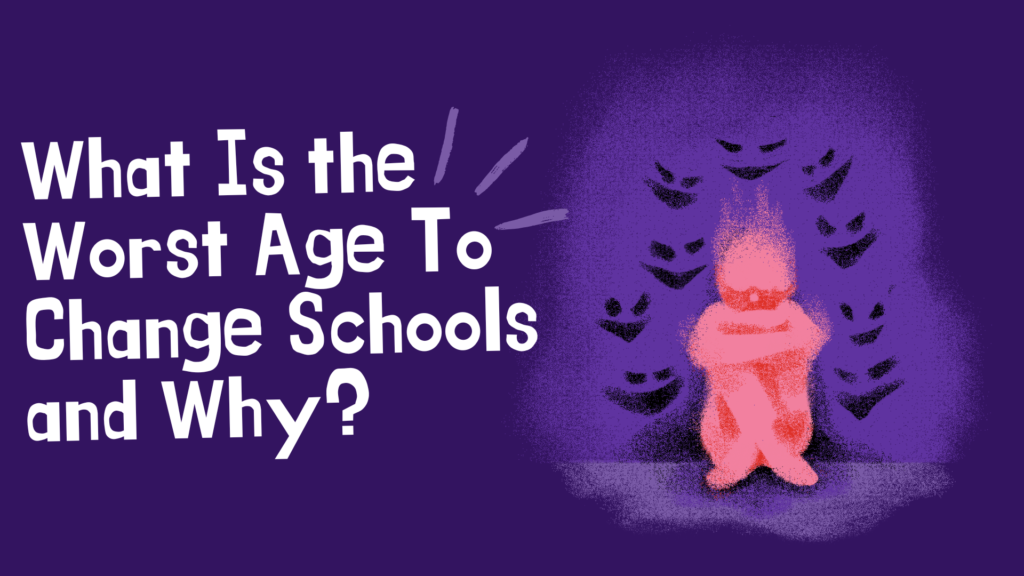
Ages 12 to 14, when students are in and around class 8, is the worst age to change schools. By this phase of our lives, we have friends to share secrets with, experience unprecedented bodily changes, and a challenging curriculum.
Moving affects a child’s mental health in different ways, and sometimes the impact cannot be reversed. It disrupts the schedule, removes social familiarity, and grows inexpressive introverts who do not welcome such a change willingly.
Best to worst age to change school
Let us understand the phases of student life to find out the best and worst age to move a child:
1 to 3 years of age (The preschool phase)
You can struggle with putting your child in preschool and watching them be away for a few hours, but this is not where you worry about changes.
Your child is too young to react or remember what happens to them during this phase. Ideally, preschool begins once your child starts walking, so consider their admission around age 2.
4 to 6 years of age (The elementary phase)
At this age, your child is experiencing social connections beyond immediate family. They are fast learners, early adapters, and are more likely to enjoy studies (than not) due to low academic pressure.
Children start making friends at this age, so a sudden change can feel unsettling. An overnight shift to unfamiliar classmates, new teachers, institution, and classroom can leave them unnerved.
Academically, it is easier to cope at this stage because the curricula across boards remain more or less similar. All your child needs at this time are nurturing teachers and a healthy school environment to make them feel at ease.
7 to 12 years of age (The junior school phase)
These children are harder to move compared to younger ones, but it is not the worst age to change schools. This is when children are usually in standard 1-6, or junior school.
The younger they are (ages 7-9), the easier it is for them to adapt to change. As studies level up, the process can be academically distressing. By this age, children have a proper school routine, friends they have known for a few years, and teachers with a familiar temperament.
The older they are (between 10 and 12) they worse it gets for them to move. By now, children develop deep friendships that are both competitive and supportive. Their academic pressures make them serious about striving for excellence. Changes at this phase can make them anxious and lower their confidence in the comfort they find in the same school.
13 to 18 years of age (The high school phase)
The middle age between junior and high school (approximately 11 to 14 years) is the worst time to change schools.
Classes 8 and 9 set the tone for preparing for the board examinations students have to write in classes 10 and 12. It is a crucial time to choose a stream based on your strongest subjects and interests.
Shifting schools at this age can disrupt curriculum alignment. At this age, students find it harder to fit into social groups. They are more susceptible to bullying as unfamiliar faces are often unwelcome. Switching schools during adolescence can make children anxious and more conscious, resulting in lower academic performance.
Ages 16 and 17 are another phase when moving is moderately easier for students. After passing 10th board examinations, it is not uncommon for students to change stream and school. By this age, students are focused on college admissions and competitive exams, so they can decide what is best for their career. It is much easier to have them on board with changes as they are more accepting of what is academically better for them.
How to make moving easier for children?
If your child is between 7 and 16 years of age, here are ways you can make moving easier for them:
Before moving
- Open discussions: as soon as you’re sure to move, sit them down and discuss where this is headed. Give them reasons why the change is necessary, and ask them to share how they feel about it. Empathize with sudden bursts of emotions and reactions to create a safe space for them to be heard.
- Involve them in the process: moving is a huge change for both kids and adults, but it can happen multiple times in your life. Involving your child in the process helps them prepare for times they would have to do it alone. Let them pack their things and set them up in their new room. Give them small chores to make a new house feel like a home.
- Explore the new place: if the neighborhood is unfamiliar, find grocery stores, parks, activity centers, and pharmacies. Explore public transport options and new commuting routes. These activities will gradually help you settle down.
During moving
- Find calm amidst chaos: don’t disrupt basic routines like eating and sleeping. Seek help from relatives if they let you stay over for 2-3 days as you set up the new place. Unpack the bedroom and washroom items first, so you have basic amenities ready as soon as you shift.
- Have patience: your child can feel agitated and out of place. Expect changes in behavior and times when they don’t feel helpful. Give them care and attention, not just a demand to get over their emotions.
After moving
- Go back to the old routine: after days of a disrupted schedule, it will be hard to return to your old routine. But bedtime and meal times must be in order right away. The rest of the activities fall in place eventually.
- Stay connected to familiarity: sudden changes are hard to cope with, and familiar things feel comforting. Help your child connect with old friends, relatives, and neighbors over video calls and group chats. Ask them what they miss and what they can do about it. Spending more time bonding with each other highlights positive aspects about the new move.
Role of teachers and schools
A new school and faculty play a huge role in easing massive transitions like these. Counsellors, orientation programs, and student adjustment processes that welcome new students can leave a positive impact that they look forward to. Consider these factors when choosing a new school for your child. How warm a new school feels to children is directly associated with their willingness to attend, learn, and excel academically.